

The Fabulous Sidney Bechet

At the end of the summer, I overhauled a Rene Dumont clarinet made in Paris sometime in the 1950s or 1960s. I purchased it on eBay a couple of years ago, intending to refurbish it for myself. It is now being played by my daughter, who started middle school last month and is in the sixth-grade band. I have had a direct and indirect hand in pairing many students with instruments recently!
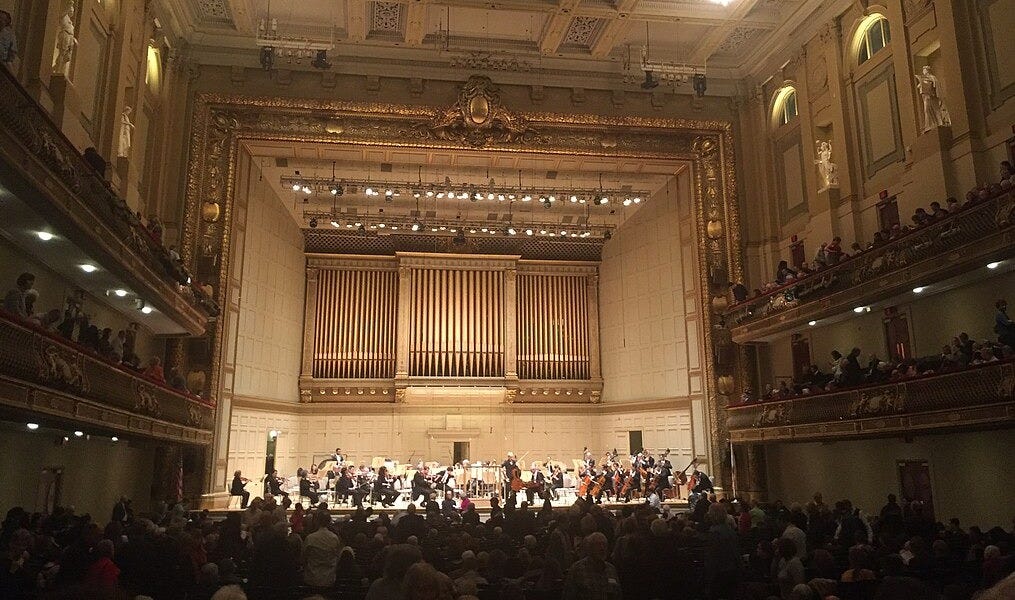
When I was growing up, my family subscribed to a concert series that the Boston Symphony Orchestra put on 3-4 times a year that introduced orchestral music to kids—the Boston Symphony Youth Concerts conducted by Harry Ellis Dickson (from 1959 to 1993). He was "that rare soul, an adult who remembers what it was like to be young, who loves young people and understands them, and who wishes to share with them that magic kingdom of the mind where music is the key." After a concert in Symphony Hall, we would spend the day in Boston doing something fun in the city. But I remember being awed by the acoustics and aesthetics of Boston Symphony Hall. It was mesmerizing. The orchestra’s sound, dynamics, and colors transported me to an immersive, stimulating, magical place. Symphony Hall is still considered one of the finest acoustic venues in the world, having been built more than 120 years ago.
I took piano lessons in 2nd and 3rd grade, but in 4th grade, I could choose a band or orchestra instrument to study in school. I wanted to play double bass in the orchestra, having heard Bill Lee (Spike’s dad) on the Odetta records my dad loved. And I was enamored with the tone and shape of them when we saw the BSO (and because even at that age, I knew I’d always have a gig as a bass player!), but the school orchestra didn’t have basses, and I was told I was too small anyway. I was crushed, but we went to a BSO youth concert soon after, and my parents promised me I could choose any other instrument. That day, they happened to feature saxophones. I don’t remember what they played or being in awe of them, but I started playing alto saxophone in the Peter Noyes school band that fall and listening to saxophone players wherever I could find them.
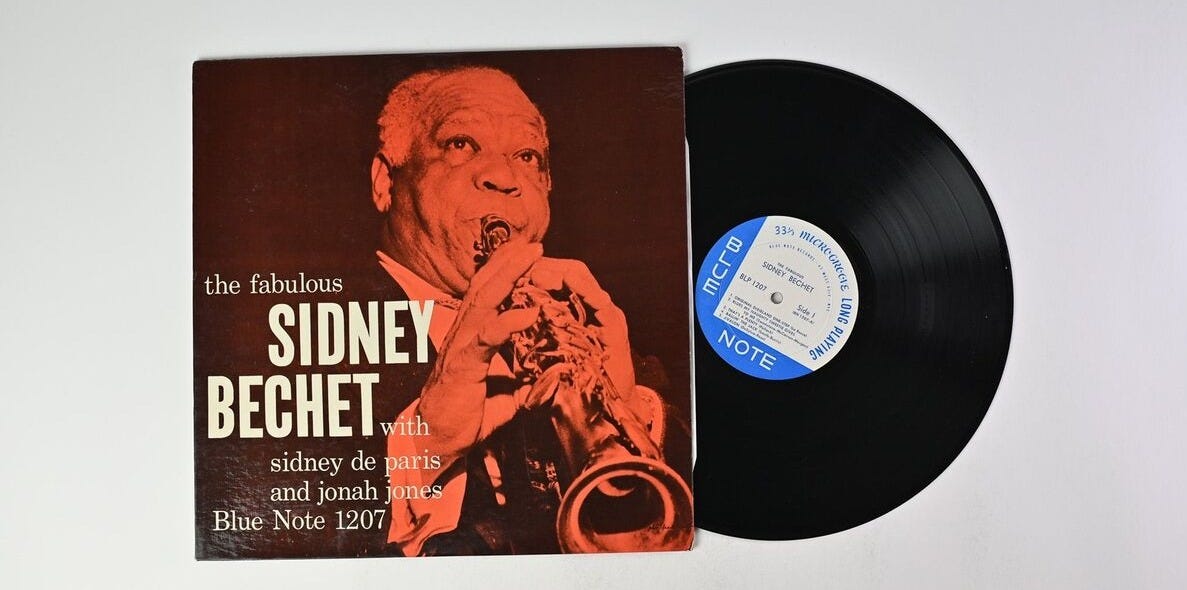
I rode my bike to the Goodnow public library weekly to take out records. They had an extensive jazz and classical collection—I copied my favorites onto blank cassettes on the Kenwood home stereo system my older brother had recently talked my father into buying. The albums I checked out at first were limited to those that had a picture of a saxophone player on the cover—John Coltrane’s “Giant Steps,” Charlie Parker’s “Now’s The Time,” and an album called “The Fabulous Sidney Bechet.” It’s from 1958 and has a picture of him on the cover as an older man playing a soprano saxophone. But unfortunately, at the time, I didn’t like it. His rapid, wide, and unrelenting vibrato sounded corny to me. I never really listened to him again (despite many people over the years telling me I should) until I bought a soprano saxophone in 2019. I don’t play with vibrato, and I still don’t care for his use of it, but I have come to love his playing, and this collection of his recordings from the early 1950s are now some of my favorites.
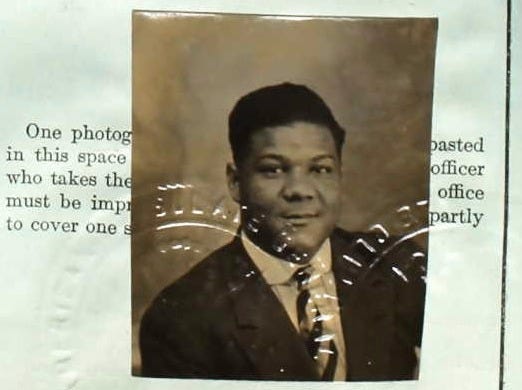
He was a child prodigy, primarily a clarinet and saxophone player, and one of the first solo voices defining early jazz—The youngest of seven children, with five older brothers, born to a middle-class black Creole family, living in the seventh-ward of New Orleans for three generations prior. His great-grandmother was born free in Illinois in 1760 and moved to New Orleans. She owned the land on St. Pierre Street where Sidney’s house stood—leaving it to her children, including Sidney’s grandfather, in her will in 1815. Despite questions and confusion about his age, Census and Baptismal records—and Sidney’s original passport application—show 1897 as the year of his birth. His father was a shoemaker and was active in local politics. He was also an avid musician and encouraged his children to play instruments. Sidney’s older brothers played music as a hobby in amateur bands, and he grew up in a musical household. From a very early age, it was clear that he was unusually gifted. After teaching himself to play songs he heard on a toy tin whistle, he was given a clarinet that had been his brother Leonard’s. He was caught red-handed playing it several times when Leonard (primarily a trombone player) wasn’t home and had an undeniable aptitude for it, which, after some prodding from their parents, his brother conceded he did not share. It was a Christmas gift to Sidney soon after.
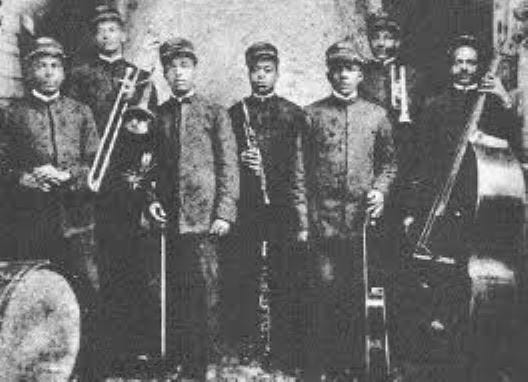
Sidney Bechet recalled hearing Buddy Bolden and the Eagle Brass band as they “battled” the Imperial Band during a street parade when he was around six or seven—just after he started playing the clarinet. Sidney’s respectable, downtown Creole family (along with many of their peers) did not appreciate Bolden’s uptown, “rough music.” His brother Leonard said he disapproved of that “low down type of music,” adding, “Us Creole musicians always did hold up a nice prestige.” Sidney, however, was captivated by the emerging sound, combining syncopated rhythms from the Caribbean islands, blues timbres, and inflections inspired by rural singers migrating into the city and uptown players (led by Buddy Bolden) getting loose with their phrasing and ad-libbing melodies. During childhood, Sidney’s mother got upset when he stayed out to listen to this “rough music,” preferring he listen to mainstream European music, which was popular in early nineteenth-century New Orleans. However, he spoke fondly of frequenting the opera house with her and hearing influential early gramophone recordings of tenor Enrico Caruso.
Soon after he heard Buddy Bolden’s band and acquired his brother’s clarinet, Leonard took him to a concert where he first heard clarinetist George Baquet—Sidney was “overwhelmed.” Around the same time, he also heard John Robichaux’s Orchestra and the Superior Band (two of the most popular bands in New Orleans) at St. Catherine’s Hall, with “Big Eye” Louis Nelson DeLille playing clarinet. Leonard recalled that it made Sidney “delirious with joy.” Nelson was also an originator of the looser uptown style that gained popularity with dance-hall listeners, influencing clarinetists Johnny Dodds and Jimmie Noone. Sidney said, “I myself learned to play by patterning my work after ‘Big Eye’ Louis Nelson. In fact, Nelson gave me my first formal instruction on the clarinet. After I learned the rudiments from him, I had to learn the rest for myself. That’s what every young person has to do”. Many older musicians in the black Creole community disliked the emerging style, deeming it low-class and referred to it as playing “ratty.” But he heard a quality he wanted to emulate: “Some musicians played the tune prettily, but I like the playing that makes me want to dance.”
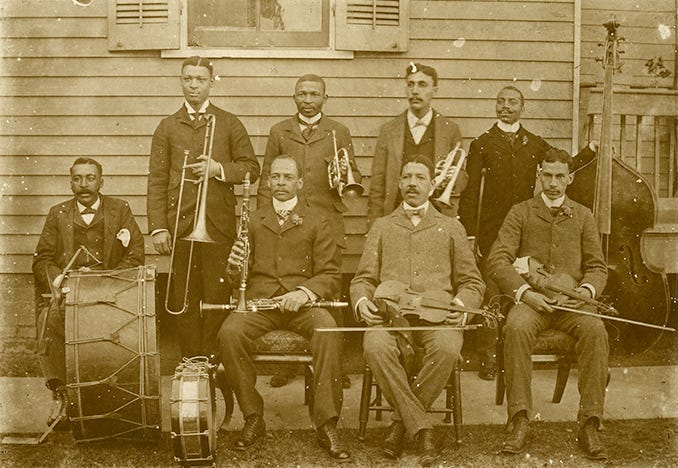
Sidney’s mother was known to organize lawn parties at the family home on Marais Street (where they moved after Sidney’s birth). She occasionally hired bands and charged revelers to enter their big yard and enjoy home-cooked Creole cuisine. For Leonard’s 21st birthday in April 1907, she booked the band of popular cornetist Manuel Perez, but Perez sent eighteen-year-old Freddie Keppard, an up-and-coming Creole cornet player, in his stead. Keppard, Bunk Johnson, and Joe “King” Oliver are the direct descendants of Buddy Bolden’s innovative “uptown” style on cornet, bridging the next generation of New Orleans trumpet players—most notably Louis Armstrong. Violinist Paul Dominguez said nobody’s playing was quite so “legitimate” after hearing Buddy play: “Bolden cause all that. He cause those younger Creole men like Bechet and Keppard to have a different style all together from the old heads like Tio and Perez. I don’t know how they do it. But, goddam, they’ll do it. They can’t tell you what’s there on paper, but just play the hell out of it”.
In addition to Manuel Perez sending a sub, the clarinetist, George Baquet, was late that day, and the band began without him. Sidney immediately pulled out his clarinet to play along, but from the safety of a room in the house—afraid of being rebuffed. According to legend, Freddy Keppard heard strains of a clarinet drifting out of the house and thought it was Baquet warming up. When he investigated why he wasn’t joining the band in the yard, he discovered ten-year-old Sidney Bechet and his clarinet. The other musicians teased Sidney about trying to steal Baquet’s gig, but all of them were deeply impressed by what they heard. After arriving and hearing him play, George Baquet, a well-respected musician and son of Theogene Baquet, who led the old Excelsior Band, invited Sidney to his house whenever he wanted guidance. Sidney held George in high regard and, at a reunion concert in 1940, spoke of the help that Baquet had given him. He may have sought advice concerning his embouchure, reeds, mouthpieces, and technique, but never about reading music (a source of pride for many Creole musicians) or studying traditional harmony. Sidney played over chord changes by ear and never learned to read music. He exhibited a lifelong interest in learning but did not care for formal musical training.
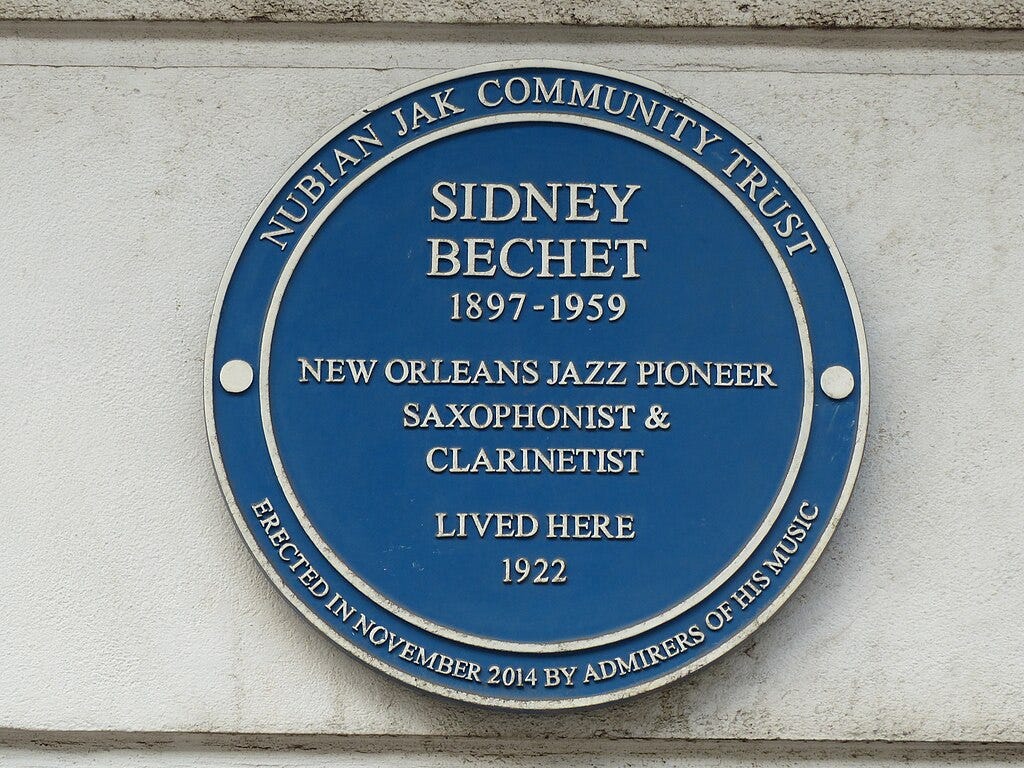
Across five decades and two continents, Sidney Bechet worked with Bunk Johnson, Freddy Keppard, King Oliver, Duke Ellington, Josephine Baker, Jelly Roll Morton, Louis Armstrong, and many other jazz luminaries. He had a profound and lasting influence on early New Orleans jazz and improvisation—admired for his lyrical phrasing, bluesy sensibility, use of vibrato, and ineffable sense of swing. Swiss conductor Ernest Ansermet called him “an extraordinary clarinet virtuoso,” applauding his “extremely difficult” solos for their “richness of invention, force of accent, and daring in their novelty and the unexpected” — an astonishing stamp of approval at a time when jazz encountered mostly contempt in classical music circles. Fifty years after hearing Sidney for the first time in 1923, Duke Ellington recalled, “I have never forgotten the power and imagination with which he played.” And I finally got past my dislike of his vibrato to appreciate and learn from his musical genius…